
Why Imada Force Gauges Matter in Cosmetics and Personal Care More Than You Think

In the beauty and personal care industry, customer experience is everything. The way a cream spreads, the smooth twist of a lipstick, the gentle click of a compact, or the pressure required to activate a pump all shape how a customer feels about a product. These small interactions may seem minor, but they strongly influence brand trust and repeat purchases.
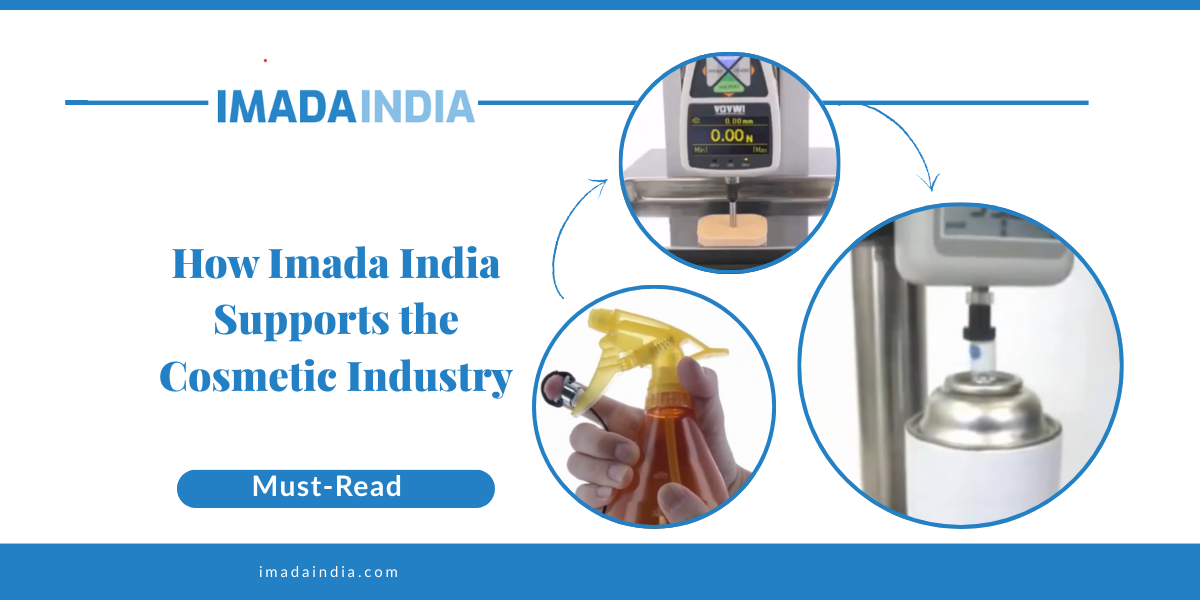
Behind these everyday experiences is precision measurement. Force gauges, torque testing tools, and texture analysis instruments help manufacturers maintain consistent quality and performance. Imada India support cosmetic and personal care manufacturers with reliable testing solutions. These tools help turn product feel into measurable, repeatable standards.
Why Measurement Is So Important in Cosmetics
Cosmetic and personal care products are tactile by nature. Customers directly handle packaging and formulations, so usability and performance must be consistent. If a cap is too tight, it frustrates the user. If a pump feels weak or inconsistent, it raises concerns about product quality. If a lipstick breaks easily, it damages brand reputation.
Precision measuring instruments remove guesswork. They allow manufacturers to define acceptable force and torque ranges and ensure that every product leaving the factory meets those standards.
Key Tests That Directly Affect Product Quality
1. Cap Opening and Closing Force
Caps must be secure enough to prevent leakage, yet easy enough to open without effort. Measuring opening and closing force helps manufacturers:
- Maintain uniform cap tightness
- Avoid leakage during transport
- Ensure user-friendly packaging
- Improve assembly consistency
Force and torque testing tools help establish reliable limits that can be monitored during production.
2. Pump and Spray Actuation Force
Lotions, serums, sanitizers, and sprays rely on pump systems. The actuation force must feel smooth and controlled. If it is too hard, customers may struggle. If it is too soft, dosing may become inconsistent.
Imada Force gauges are used to measure:
- Initial actuation force
- Continuous pumping force
- Return performance
- Overall mechanism consistency
This ensures reliable dispensing and a premium user experience.
3. Break Strength of Sticks and Applicators
Products like lipsticks, solid deodorants, balms, and applicators must withstand regular use without breaking. Measuring break strength helps manufacturers:
- Improve formulation stability
- Strengthen product structure
- Prevent customer complaints
- Reduce returns and damage claims
Mechanical and digital force gauges are commonly used to test compression and bending resistance.
4. Peel Strength of Seals and Labels
Protective seals ensure product safety and tamper evidence. Labels must remain intact despite humidity, handling, and transport conditions.
Peel testing helps evaluate:
- Adhesive strength
- Seal reliability
- Packaging durability
- Tamper resistance
By measuring peel force, manufacturers can select the right materials and adhesives for long-term performance.
5. Compression and Texture Consistency of Creams
Texture plays a major role in skincare and cosmetic products. Customers expect consistency in firmness, smoothness, and spreadability.
Texture and compression testing allow manufacturers to:
- Measure firmness and resistance
- Maintain batch-to-batch consistency
- Standardize formulation performance
- Improve R&D development processes
These measurements are especially valuable when adjusting formulations or introducing new ingredients.
Tools That Support Accurate Testing
Imada’s range of digital and mechanical force gauges are widely used for compression, tension, peel, and push-pull testing. Test stands and specialized attachments help simulate real-world usage conditions.
Imada India supplies these solutions along with proper guidance. The goal is not just to sell instruments, but to help manufacturers build reliable testing systems.
Calibration and traceability are also important. Accurate instruments ensure that quality standards remain valid over time and across different production batches.

